Best Chef's Knives in 2026
Quick Comparison: Top 5 Chef's Knives
The best chef's knives of 2026 — read like a gauge cluster.
| Feature | Wüsthof Classic 🏆 🏆 | Victorinox Fibrox Pro | MAC Professional MTH-80 | Tojiro DP Gyutou |
|---|---|---|---|---|
| Price | premium tier | budget tier | premium tier | budget tier |
| Steel | X50CrMoV15 | X50CrMoV15 | Original MAC Steel | VG-10 Cobalt |
| Hardness | 58 HRC | 56 HRC | 60-61 HRC | 60 HRC |
| Weight | 8.5 oz | 6.3 oz | 6.7 oz | 6.0 oz |
| Made In | Solingen, Germany | Switzerland | Seki, Japan | Tsubame, Japan |
| Style | Western Forged | Western Stamped | Japanese Hybrid | Japanese |
Best Overall: Wüsthof Classic 8-Inch
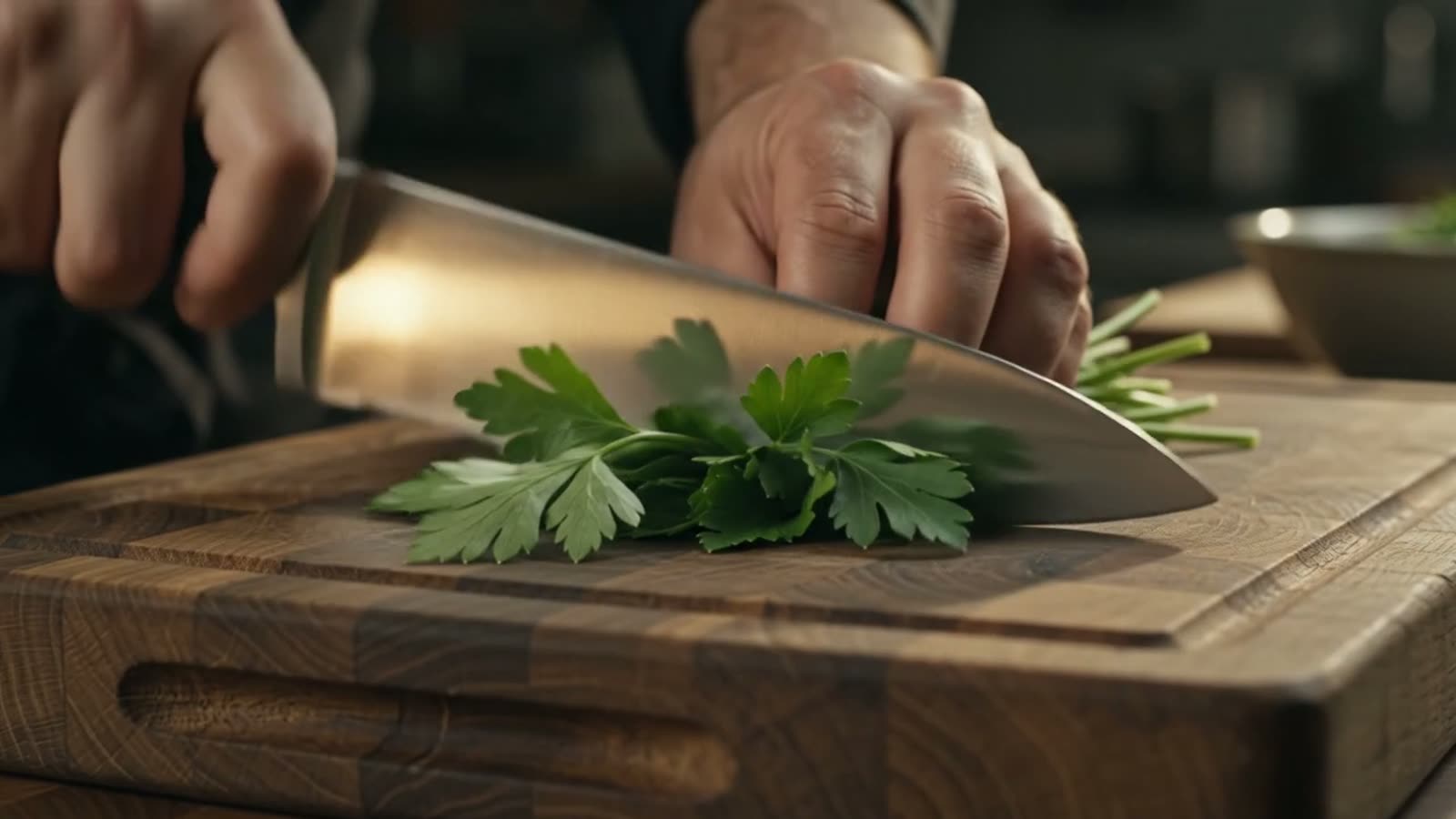
Wüsthof Classic 8-Inch Chef's Knife
Best Overall · German Forged Since 1814
Not deciding today? Add it to your cart over there — Amazon keeps it saved (and flags any price change) until you're ready.
The Wüsthof Classic has been the benchmark chef's knife for over 200 years, and the current generation is the best yet. Forged from a single piece of high-carbon stainless steel in Solingen, Germany, every knife passes through 40 production steps before leaving the factory. The result is a blade that feels like a natural extension of your hand.
Wüsthof's Precision Edge Technology (PEtech) uses computer-controlled sharpening to create a 14-degree edge per side — sharper than previous generations — while the X50CrMoV15 steel balances edge retention with easy resharpening. The full bolster provides knuckle clearance and the triple-riveted Polyoxymethylene handle is dishwasher-safe (though hand washing is recommended).
In the premium tier, it's a lifetime purchase. Wüsthof offers a lifetime warranty, and with proper care (honing before each use, professional sharpening annually), this knife will outlast you.
✓ Pros
- Perfect weight and balance for all-day use
- PEtech edge stays sharp 2x longer than previous models
- Full tang, forged construction — lifetime durability
- Lifetime warranty from a 200+ year old company
- Easy to sharpen and maintain at home
✗ Cons
- Full bolster makes heel sharpening slightly difficult
- Heavier than Japanese alternatives (8.5 oz vs. 6 oz)
- A real investment vs. the budget-tier Victorinox
Best Budget: Victorinox Fibrox Pro 8-Inch
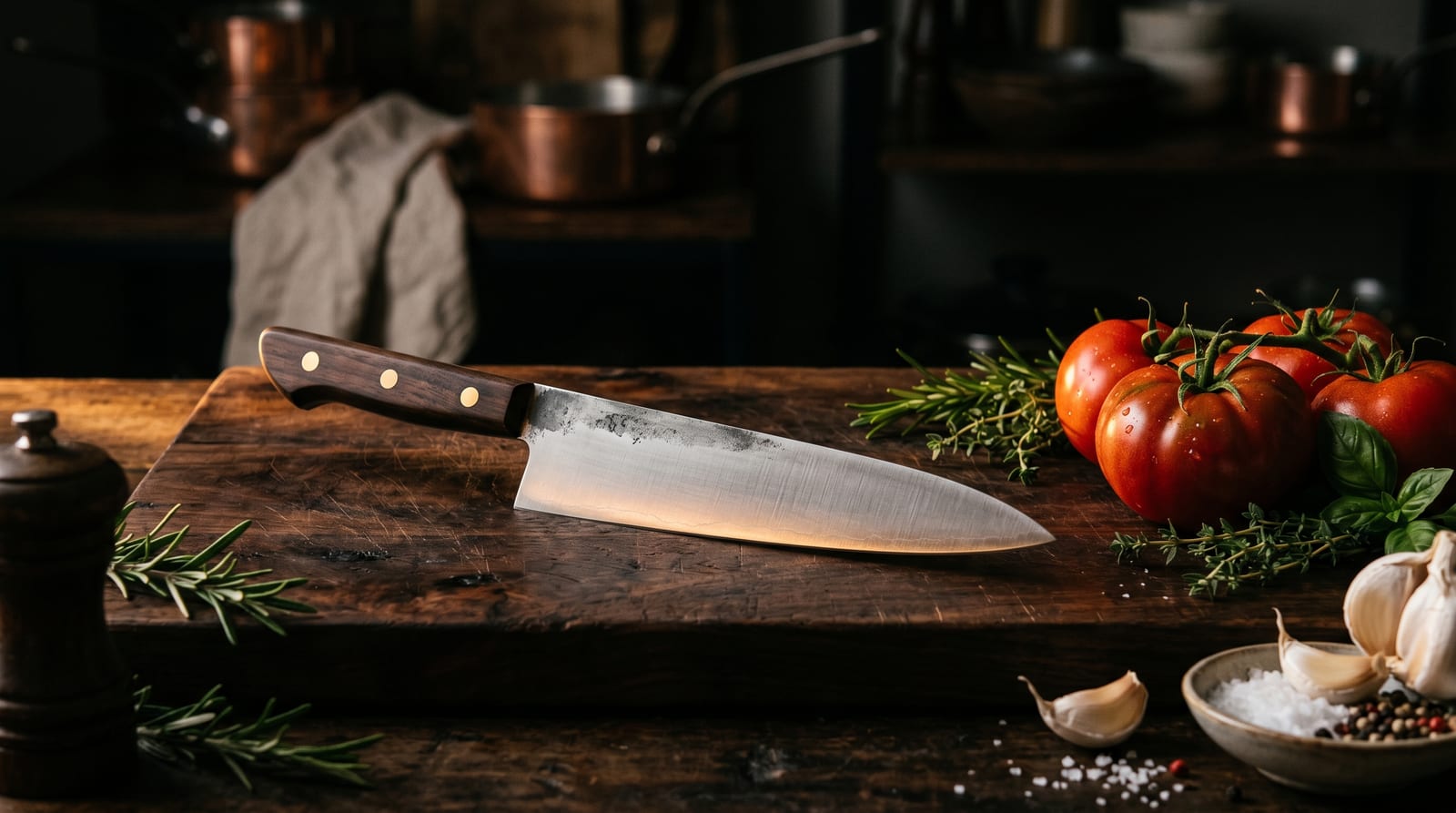
Victorinox Fibrox Pro 8-Inch Chef's Knife
Best Value · Every Expert's Budget Pick
Not deciding today? Add it to your cart over there — Amazon keeps it saved (and flags any price change) until you're ready.
The Victorinox Fibrox Pro is the most recommended budget chef's knife in the world — and for good reason. Selling budget tier, it outperforms many knives three times its price. Wirecutter, America's Test Kitchen, and Serious Eats have all named it their top budget pick for over a decade running.
The blade uses the same X50CrMoV15 steel as the Wüsthof (at a slightly lower hardness), delivering genuine sharpness and easy resharpening. The Fibrox handle is ergonomic and slip-resistant even when wet. The no-bolster design means you can sharpen the entire edge, heel to tip, without obstruction.
If you're a beginner, on a budget, or just want a beater knife for heavy-duty prep, this is the one. Buy two — one for home, one for camping.
✓ Pros
- Unbeatable value budget tier — best knife mid-range
- Same steel alloy as knives 4x the price
- Lightweight (6.3 oz) and comfortable for small hands
- No bolster = easy full-edge sharpening
- Swiss-made quality with NSF certification
✗ Cons
- Stamped construction lacks the heft of forged knives
- Needs sharpening more frequently (softer at 56 HRC)
- Utilitarian looks — no Damascus beauty here
Best Japanese: MAC Professional MTH-80
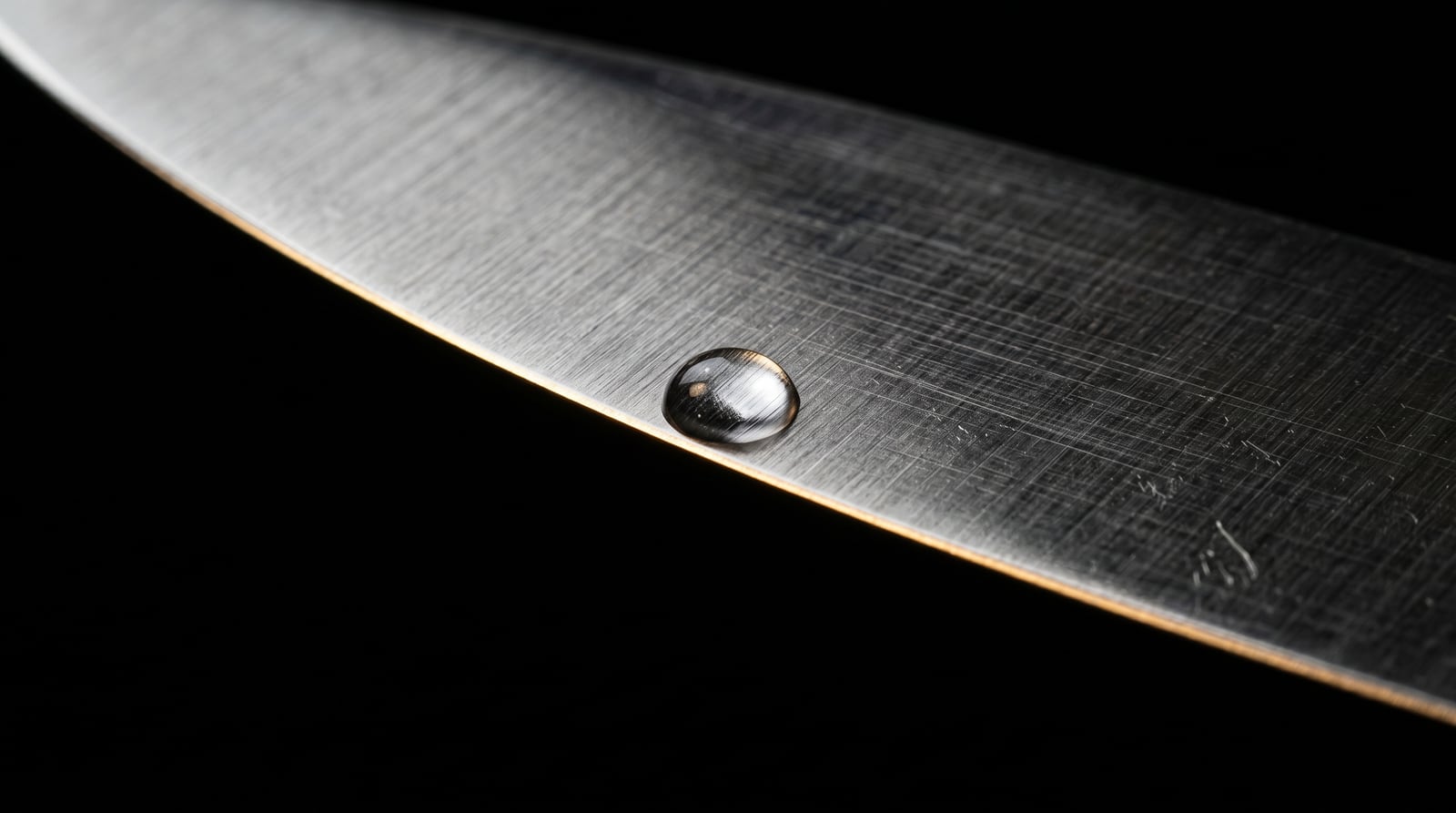
MAC Professional Series 8-Inch Chef's Knife (MTH-80)
Best Japanese · Pro Chef Favorite
Not deciding today? Add it to your cart over there — Amazon keeps it saved (and flags any price change) until you're ready.
The MAC Professional MTH-80 is the knife professional chefs reach for when precision matters. Made in Seki, Japan — the historic center of Japanese bladesmithing — the MAC bridges the gap between delicate Japanese geometry and Western durability. At 60-61 HRC, it's harder than German steel, which means it takes and holds a sharper edge.
The thin blade profile (noticeably thinner than the Wüsthof) glides through food with less resistance, making it exceptional for slicing fish, herbs, and vegetables. The dimpled "Granton" edge reduces food sticking. Despite being a Japanese-style knife, it uses a Western handle shape that's immediately comfortable for anyone upgrading from a German knife.
✓ Pros
- Razor-sharp out of the box — noticeably sharper than German knives
- Thin blade geometry reduces food resistance
- Lighter weight (6.7 oz) reduces hand fatigue
- Hybrid design: Japanese sharpness + Western ergonomics
- Holds its edge significantly longer than German steel
✗ Cons
- Harder steel can chip if used on bones or frozen food
- More expensive, in the premium tier
- Must be hand-washed — no dishwasher
Best Japanese Value: Tojiro DP Gyutou
Tojiro DP Gyutou 8.2-Inch Chef's Knife
Best Japanese budget tier · VG-10 Steel
Not deciding today? Add it to your cart over there — Amazon keeps it saved (and flags any price change) until you're ready.
The Tojiro DP is the gateway drug to Japanese knives. Selling budget tier, it uses VG-10 cobalt alloy steel — the same premium steel found in knives costing far more — sandwiched in a 3-layer clad construction for corrosion resistance. Made in Tsubame, Japan, an industrial city renowned for metalworking, the Tojiro delivers real Japanese cutting performance at a fraction of the cost.
✓ Pros
- VG-10 steel at a budget price — remarkable value
- Genuinely sharp Japanese edge geometry
- Lightweight at 6 oz for precise cuts
- 3-layer clad construction for durability
✗ Cons
- Handle ergonomics are basic compared to MAC or Wüsthof
- Requires careful maintenance (hand wash, hone regularly)
- Thin edge can chip on hard squash or bones
How to Choose the Right Chef's Knife
German vs. Japanese: What's the difference?
| Feature | German (Wüsthof, Henckels) | Japanese (MAC, Tojiro, Shun) |
|---|---|---|
| Steel hardness | 56-58 HRC | 60-63 HRC |
| Blade thickness | Thicker, more robust | Thinner, more precise |
| Edge angle | 14-15° per side | 10-15° per side |
| Weight | Heavier (7-9 oz) | Lighter (5-7 oz) |
| Best for | Rocking cuts, heavy prep | Push cuts, slicing, precision |
| Maintenance | Lower — more forgiving | Higher — harder but more brittle |
| Durability | Can handle abuse | Requires careful use |
What steel matters
The steel type determines how sharp the knife gets, how long it stays sharp, and how easy it is to maintain. Here are the most common steels in kitchen knives:
- X50CrMoV15: The standard German kitchen steel. Good balance of sharpness, toughness, and stain resistance. Used by Wüsthof and Victorinox.
- VG-10: Premium Japanese steel with cobalt for extra hardness. Takes a very fine edge. Used by Tojiro, Shun, and many others.
- AUS-10V: Japanese steel similar to VG-10 but slightly harder. Used by Dalstrong.
- High-carbon (non-stainless): Traditional carbon steel. Takes the sharpest edge but will rust and patina without regular oiling. For enthusiasts only.
Buying a knife as a gift? Get it there on time.
If you're ordering a chef's knife for a birthday or holiday, a free Prime trial unlocks fast, often next-day shipping — handy insurance against gift-timing deadlines. Cancel anytime before it renews.
As an Amazon Associate, we earn from qualifying purchases, including Prime signups via this link.
Complete your knife kit
Honing Steel
A few strokes before each use realigns a rolled edge — the single habit that keeps any knife cutting like new between sharpenings.
Shop on Amazon →Whetstone Sharpening Set
Honing only realigns the edge; a whetstone actually removes steel to restore true sharpness every few months.
Shop on Amazon →End-Grain Cutting Board
A hard glass or ceramic board dulls an edge fast — wood or composite end-grain boards are far kinder to your knife's edge.
Shop on Amazon →Knife Edge Guards
Drawer storage without a guard is how good edges get chipped and fingers get cut reaching in — cheap insurance either way.
Shop on Amazon →Magnetic Knife Strip
Wall storage keeps edges from knocking into other knives in a drawer and makes your best blade the one you actually reach for.
Shop on Amazon →Frequently Asked Questions
The Wüsthof Classic 8-inch Chef's Knife is the best overall chef's knife in 2026. It offers exceptional balance, German-forged durability, and a Precision Edge Technology (PEtech) blade that stays sharp twice as long as previous generations. It typically sells in the premium tier.
It depends on your cooking style. German knives (Wüsthof, Henckels) are heavier, more durable, and better for rocking cuts and heavy-duty tasks like breaking down chicken. Japanese knives (MAC, Tojiro) are lighter, sharper, and excel at precise slicing and delicate prep. Most home cooks are best served by a German knife.
The Victorinox Fibrox Pro, which typically sells budget tier, proves you don't need to spend a fortune for an excellent knife. However, the mid-to-premium range (Wüsthof Classic, MAC Professional) delivers noticeably better edge retention, balance, and ergonomics that make daily cooking more enjoyable.
An 8-inch chef's knife is the most versatile size for home cooking. It handles everything from mincing garlic to slicing watermelon. If you have smaller hands or a smaller cutting board, a 6-inch is a good alternative. Professional chefs often prefer 10-inch.
Hone your knife with a honing steel every 2-3 uses to realign the edge. Actually sharpen it on a whetstone or with a professional service every 3-6 months depending on use. German steel knives (like Wüsthof) need sharpening less often but to a lower angle. Japanese knives need it more often but achieve a sharper edge.
Related Comparisons
Buying Guides
Sources & Methodology
This guide was compiled from manufacturer specifications, current Amazon listings, professional reviews from America's Test Kitchen, Serious Eats, and Wirecutter, and input from culinary professionals and knife enthusiasts on Reddit r/chefknives.
Steel hardness ratings are manufacturer-specified Rockwell C (HRC) values. Prices change frequently — always check the live price on Amazon via the links above.
Last reviewed: May 28, 2026